Flat lay photography · 7 min read
Flat Lay Photography: What It Is and When to Use It
A plain-English definition of flat lay photography for clothing brands: what the format shows and hides, how it compares with ghost mannequin and on-model images, and when it is the right choice.
By Surajnarayanan SUpdated
Definition
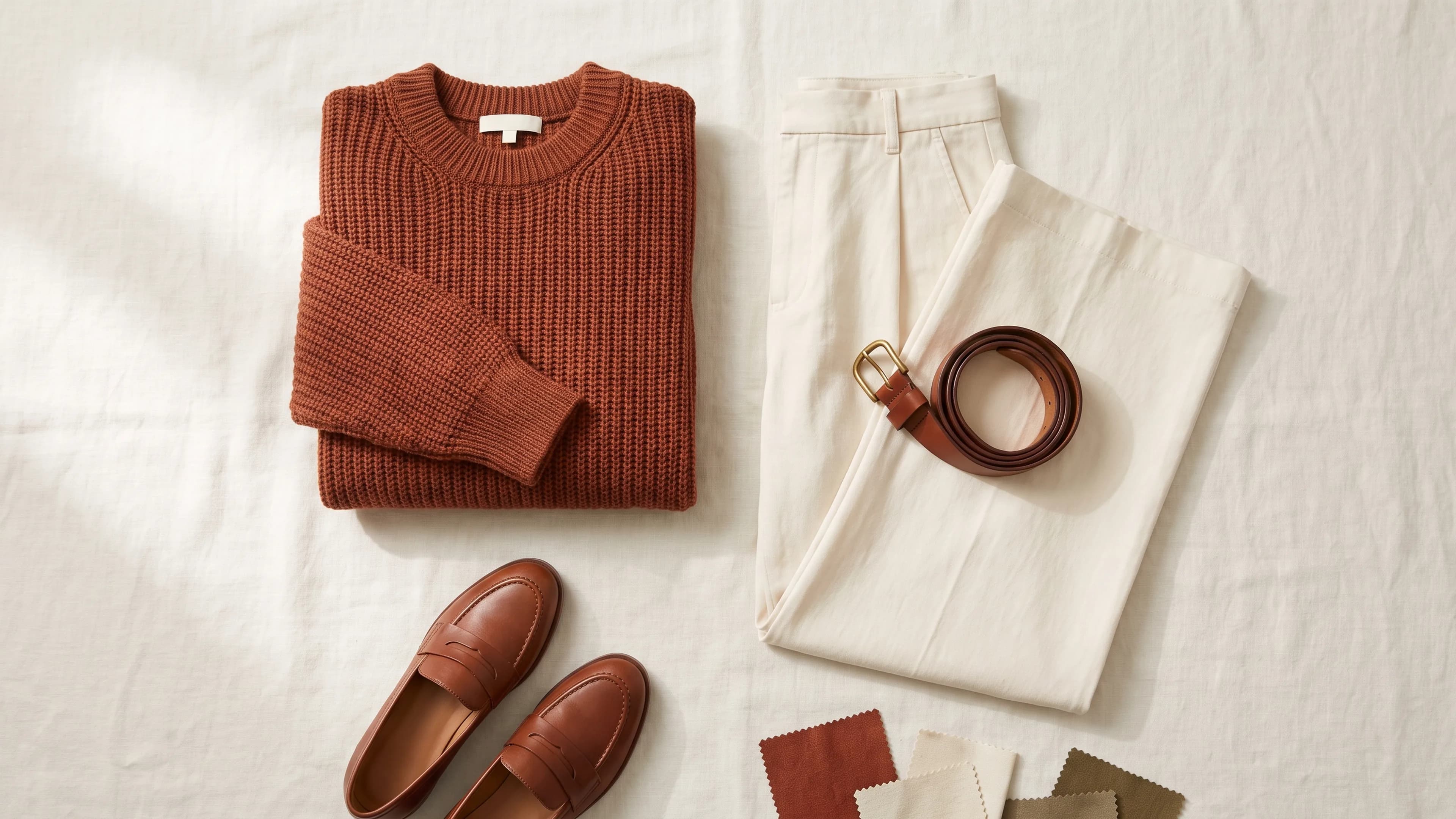
Flat lay photography is a way of photographing a product laid flat on a surface and shot from directly above, with the camera held parallel to the surface. In fashion ecommerce it records a garment's colour, print and full outline quickly and the same way every time, but it cannot show fit or drape.
8M Studio is a managed production studio. This page defines a photography format; it is not a shooting tutorial or an 8M rate card.
Direct answer
A flat lay is the quickest way to get an accurate, repeatable record of a garment's colour, print and outline. Use it as the product record, for uniform category grids, for outfit content and as source material for on-model conversion. Add an on-model or ghost mannequin view wherever shoppers buy on fit, drape or proportion.
Best for
- +Ecommerce and catalogue teams deciding which image formats a product page needs
- +Buyers comparing studio quotes that use flat lay, packshot and ghost mannequin loosely
- +Brands with flat lay libraries weighing whether to add on-model views
Not designed for
- -A step-by-step flat lay shooting tutorial (that lives in the on-model conversion guide)
- -Styled social flat lays with props and art direction
- -A universal rate card or an 8M Studio price list
What is flat lay photography?
Flat lay photography means arranging a product on a flat surface and photographing it from directly overhead, with the camera parallel to the surface. The term covers plain product records shot for a product page and styled compositions built for social or editorial use. For clothing, the garment is the subject and nobody wears it.
The format is popular because it is simple to repeat. One surface, one lighting setup and a fixed camera height can hold the same framing across a whole catalogue, which keeps category pages tidy. The trade-off is depth: a garment lying flat shows its outline, but not how it hangs, stretches or moves on a body.
Flat lay vs ghost mannequin, on-model and packshot
Flat lay is one of four presentation formats clothing brands usually choose between, and each records a different part of the product. Flat lay shows outline and print. Ghost mannequin shows three-dimensional shape without a person. On-model shows fit and proportion. Packshot is a looser word for any clean product image on a plain background.
| Format | What it shows | What it hides | Typical use |
|---|---|---|---|
| Flat lay | Colour, print placement, full outline and flat construction details | Drape, fit, volume and how the garment falls | Product records, consistent category grids, outfit content and source input for on-model conversion |
| Ghost mannequin | Three-dimensional shape, neckline and inside back, with no person visible | Fit on a real body and movement | Product pages where shape matters but a model is not needed |
| On-model | Fit, proportion, drape and styling on a person | Some close detail; it also needs model, styling and usage decisions | Product pages for garments bought on fit, and campaign imagery |
| Packshot | A clean product image on a plain, usually white, background | Depends on which format the studio means by the word | Marketplace main images and catalogue listings; confirm the format before comparing quotes |
When the shape of the garment matters more than a worn view, ghost mannequin is often the next format to add. Choosing a provider for it is a separate decision, covered in how to choose a ghost mannequin service.
When to use flat lay photography
Use flat lay when the buying question is what the product looks like rather than how it fits. It works as the product record every later image is checked against, for category pages that need identical framing, for outfit and bundle content, and as source material for on-model views generated later.
- As the product record: an accurate reference for colour, print and outline that retouchers, reviewers and AI conversion all work from.
- For consistent grids: one camera height and one surface keep a category page uniform across many SKUs and drops.
- For outfit and bundle content, where a styled flat lay shows several pieces together. Product pages still need one variant per image.
- As input for on-model conversion, when the flat lay is complete enough to check generated images against. Which garments are fine as flat lay alone, and how to shoot for conversion, is in mannequin and flat-lay to on-model at scale.
When flat lay is the wrong format
Flat lay is the wrong main image when shoppers decide on fit, drape or proportion. Dresses, trousers, tailoring, outerwear and stretch fabrics usually need a worn or ghost mannequin view as well, because a garment lying flat cannot show length on the body, how fabric falls, or where a waistband or shoulder sits.
It is also weak when a product has volume that collapses when laid down, such as structured bags or padded jackets, or when a channel's main-image rules call for a different presentation. Check the destination before planning the shoot with fashion ecommerce image guidelines by channel, and plan the full view set with the fashion ecommerce product photography shot list.
Flat lay photography examples by garment
How well a flat lay works depends on the garment. The same overhead set-up gives a near-complete record of a printed T-shirt and a poor one of a padded jacket. The examples below show what each garment's flat lay should capture, and where a second view is needed before the product page is complete.
- Printed T-shirt: a strong flat lay subject. Square it to the frame with the print centred, so print scale and placement read correctly. Add a close-up of the print edge and the neck label, and a back view if the back is printed.
- Slim jeans: the flat lay shows wash, pocket placement, stitching and hardware well. It cannot show rise or leg shape on a body, so pair it with a worn view. Lay both legs straight, because a turned-up hem hides the true length.
- Chunky knit jumper: texture and colour come through, but the weight of the yarn spreads the body wider than it sits when worn. Keep the sleeves in a natural position and add a close-up of the rib or cuff.
- Silk scarf: one of the best fits for the format, because the product is flat in use. Show the full square once for the print, then a knotted or folded detail if shoppers need to see how the fabric falls.
- Styled weekend outfit: a styled flat lay of a shirt, chinos, belt and trainers sells the look on social or a bundle page. On the product page each piece still needs its own plain flat lay, one variant per image.
- Padded jacket: the hardest case. Laid flat, the filling compresses and the hood folds over itself, so volume and shape are lost. A ghost mannequin or on-model view usually becomes the main image, and the flat lay stays the colour and detail record.
Flat lay terms you will see in a brief
Briefs and studio price lists use several overlapping words for the same format, so two quotes for flat lay can describe different work. The terms below are the ones that most often change what a studio actually delivers. Confirm each one in writing before a shoot or an AI conversion starts, and compare quotes on that basis.
- Top-down or overhead shot: the camera points straight down at the product. An angled camera is not a true flat lay and distorts length.
- Product flat lay: one garment, one variant, a plain background and the same framing for every SKU. This is the version used on product pages.
- Styled flat lay: several pieces or props arranged as a composition, usually for social, editorial or outfit content.
- Knolling: arranging items in parallel lines or at right angles on a flat surface, then shooting from above. It is a styled flat lay technique.
- Shaping or padding: tissue or card placed inside a garment to give it a little volume. It changes the outline, so agree whether it is allowed.
- Front, back and detail: views that studios often price separately. A back view and close-ups of print, labels and trims may be extra images.
What flat lay photography costs
Flat lay rates vary by country, volume and what is included. On studios' own price lists checked 6 October 2026, Shootify lists basic flat lay at $42 falling to $34 per photo by volume, WOOE Studios lists flat lay from £12 per image, and picpoint lists flatlay from €22 net.
These are examples, not a market average and not 8M Studio prices. Set-up fees, minimum orders, VAT, steaming and extra back or detail views all change the total. The full comparison by shot type, with every source linked, is in product photography pricing for fashion ecommerce.
Flat lay at scale with AI
At catalogue scale, AI is mostly used to turn existing flat lays into on-model views, not to replace the flat lay itself. The flat lay stays the product record. A reviewer then checks every generated image against it for colour, print, outline, trims and closures before anything is approved for a product page.
That only holds if the flat lay shows the garment completely, including a back view and close-ups, and if someone owns the frames that fail review. The shooting checklist, failure table and route comparison are in mannequin and flat-lay to on-model at scale. The review gates are in the AI fashion imagery QC checklist. Where AI is the wrong tool for a garment, start with when not to use AI fashion images.
8M Studio runs this as managed AI Catalogue Production. The brand sends flat lay or mannequin packs and a brief; the studio operates generation, human review and delivery. It is not a self-serve tool.
Frequently asked questions
Is flat lay photography the same as a packshot?
Not always. Packshot usually means a clean product image on a plain background, and studios use the word for flat lays, ghost mannequin images and cut-outs alike. A flat lay specifically means the product is laid on a surface and shot from directly above. Confirm the format before comparing quotes.
What is the difference between flat lay and ghost mannequin photography?
A flat lay shows the garment lying on a surface from above, so it records outline and print but not shape. Ghost mannequin photographs the garment on a mannequin and removes the mannequin in editing, so the piece keeps a three-dimensional shape with no person visible.
Is flat lay photography good for clothing ecommerce?
Yes, for the right job. It is a reliable product record, keeps category grids consistent and suits basics, accessories and printed pieces. For garments bought on fit, such as dresses, trousers and outerwear, add an on-model or ghost mannequin view.
How much does flat lay photography cost per image?
On studios' own price lists checked 6 October 2026, Shootify lists basic flat lay at $42 to $34 per photo by volume, WOOE Studios from £12 per image and picpoint from €22 net. Set-up fees, VAT and extra views change the total. These are examples, not 8M Studio prices.
What is a styled flat lay?
A styled flat lay arranges several products or props into a composition, such as a full outfit with shoes and accessories. It is used for social, editorial and bundle content. Product pages usually need a plain product flat lay instead: one garment, one variant, framed the same way for every SKU.
Can flat lay photos be turned into on-model images?
Yes, if the flat lay shows colour, print, outline and closures clearly and includes a back view and close-ups. AI can generate the on-model views, but a person still has to check each one against the flat lay. Details hidden in the source get guessed, not recovered.
Does a flat lay need a back view?
Often, yes. A back view is worth adding whenever the back carries print, closures, pockets or a different construction from the front. It is also needed if the flat lay will be converted into on-model images, because a generated back can only guess at details the source never showed.
What does knolling mean in flat lay photography?
Knolling is arranging items in parallel lines or at right angles on a flat surface, then shooting from above. It is a styled flat lay technique used for kit lists, accessories and editorial content, not for single-garment product pages.
Evidence and sources
- Commerce images must accurately display the product and meet channel image requirements. Verified 2026-08-05.
- Shootify product photography pricing - Vendor price list: flat lay basic $42/$34, advanced $64/$52 per photo by volume tier. Checked 6 October 2026, as cited in our product photography pricing guide.
- WOOE Studios clothing photography - UK vendor page: flat lay from £12, ghost mannequin from £14, on-model from £16 plus shoot costs, per single-side image. Checked 6 October 2026, as cited in our product photography pricing guide.
- picpoint Preise - German vendor price list (Düsseldorf): flatlay from €22, laid garments from €16, all net. Checked 6 October 2026, as cited in our product photography pricing guide.
Continue the decision
Have a flat lay library that needs on-model views?
If your catalogue already has flat lay or mannequin packs and the next step is reviewed on-model images at volume, talk to us about the garments, views and channels involved. We'll scope whether a representative paid pilot makes sense before any volume is committed.