AI model swap fashion catalogue · 12 min read
AI Model Swap for Fashion Catalogues: How to Swap Models With Consent, Tags and Labels
An AI model swap replaces the identity of the person in an existing fashion image, by changing the face or the whole head, while the garment, pose, light and framing stay as shot. This guide covers why catalogue teams swap models, the two-person consent check, Amazon's tag, Google's DigitalSourceType and EU labels, with a pre-flight checklist you can run in the browser.
By Surajnarayanan SUpdated
Definition
An AI model swap replaces the identity of the person in an existing fashion image, by changing the face or the whole head, while the garment, pose, light and framing stay as shot. Brands use it to localise a catalogue for new markets, hold one house identity across SKUs, or reuse an approved shoot. Before any swap, get written consent from both people involved, never use minors or public figures, and plan disclosure: Amazon's synthetic-performer tag, Google's DigitalSourceType metadata and, for EU shoppers, an Article 50 label.
Not legal advice. This guide summarises public rules and guidance as read on 9 October 2026. Have your counsel review consent records, model agreements and channel decisions for your own images.
At a glance
- Two people, two consents: the model whose body stays, and the identity that goes in
- A swap is still an AI edit: tag and label it for each channel it reaches
- The garment is the product: a swap that changes a lapel, print or colour fails
This guide covers swapping the identity on fashion images that already exist. Keeping one face consistent while you generate new images is a different job, covered in the fashion AI identity lock guide. Changing the garment colour while the person stays is an AI colourway swap.
Direct answer
Swap only with written consent from both people in the frame, keep the garment exactly as it was shot, and tag and label the result for every channel it reaches. A self-serve tool fits a few images with clear rights and your own reviewer. A governed programme fits hundreds of SKUs, several markets or one house identity.
Best for
- +Catalogue and ecommerce leads who want to reuse approved on-model imagery with a different model identity, for a new market, a refreshed look or one house identity
- +Studios and agencies adding AI model swaps for brand clients and needing a consent and disclosure routine they can put in writing
- +Brand, legal and channel reviewers asked to sign off a swap programme for Amazon, Google Shopping or EU storefronts
Not designed for
- -Consumer face-swap, selfie or meme tutorials
- -Swapping in a celebrity, public figure, lookalike or anyone under 18. This page tells you not to
- -Legal advice. It's an operating checklist to take to your counsel
- -A tool ranking or a face-match score
What AI model swap means in fashion production
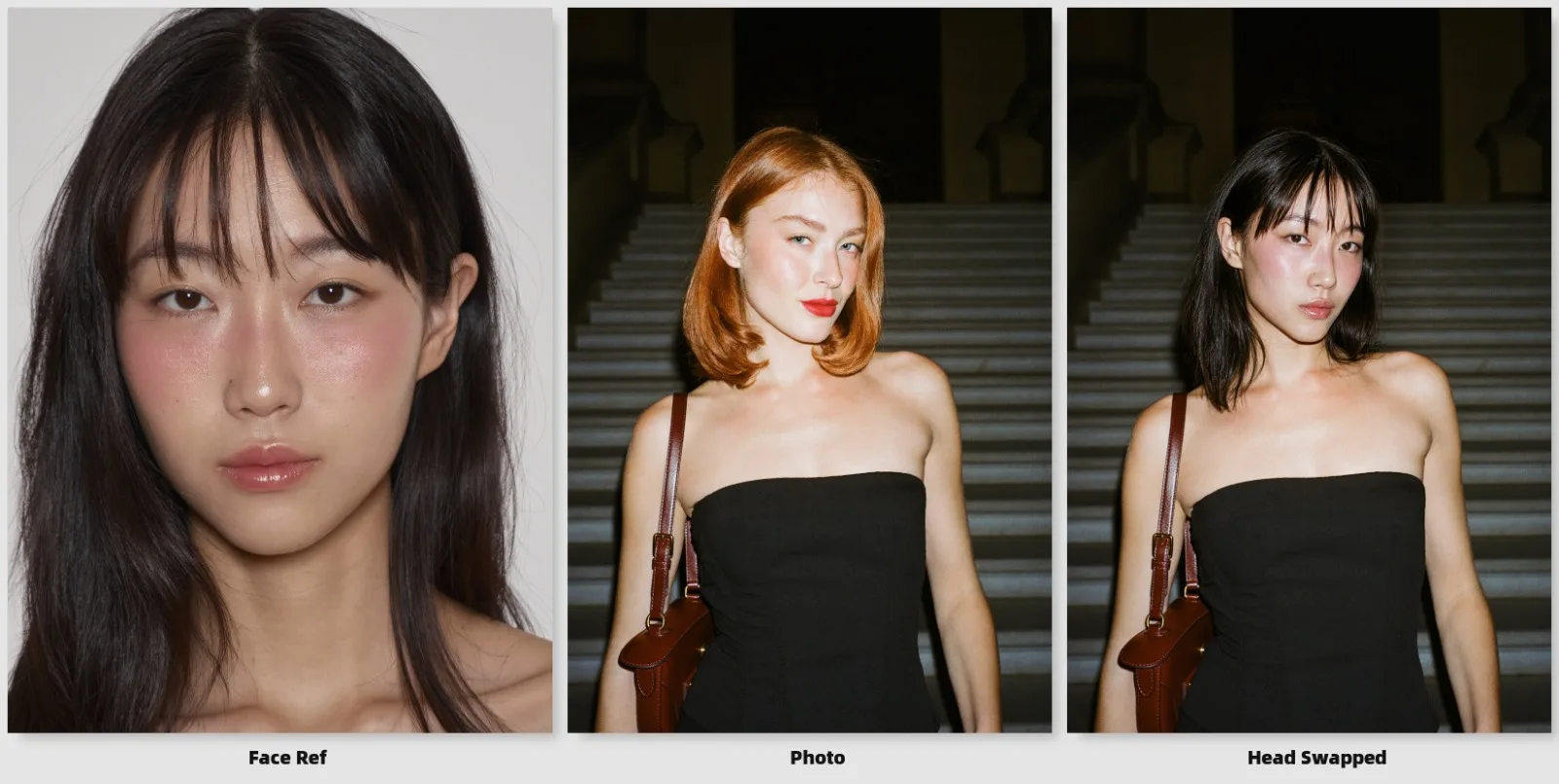
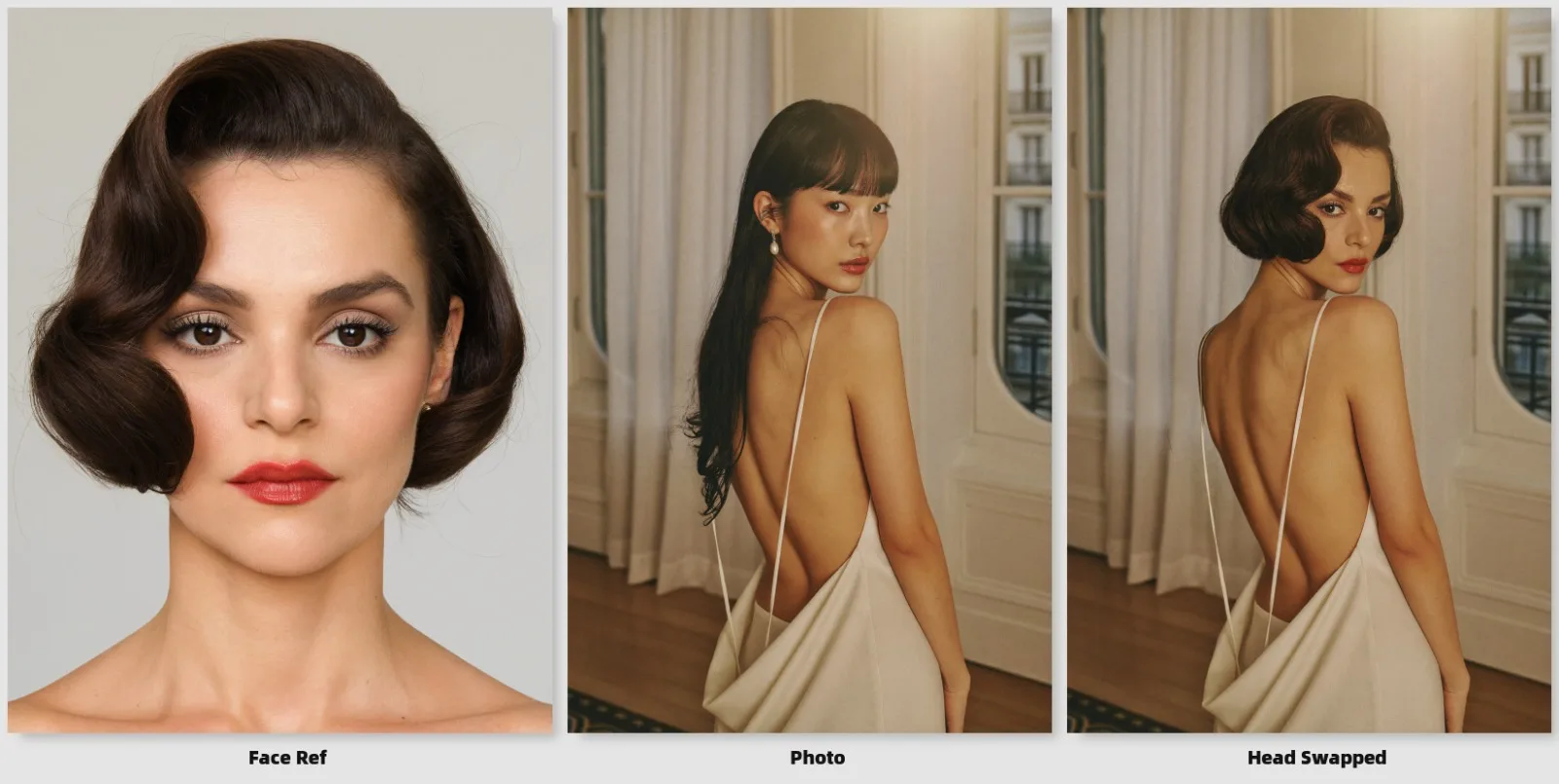
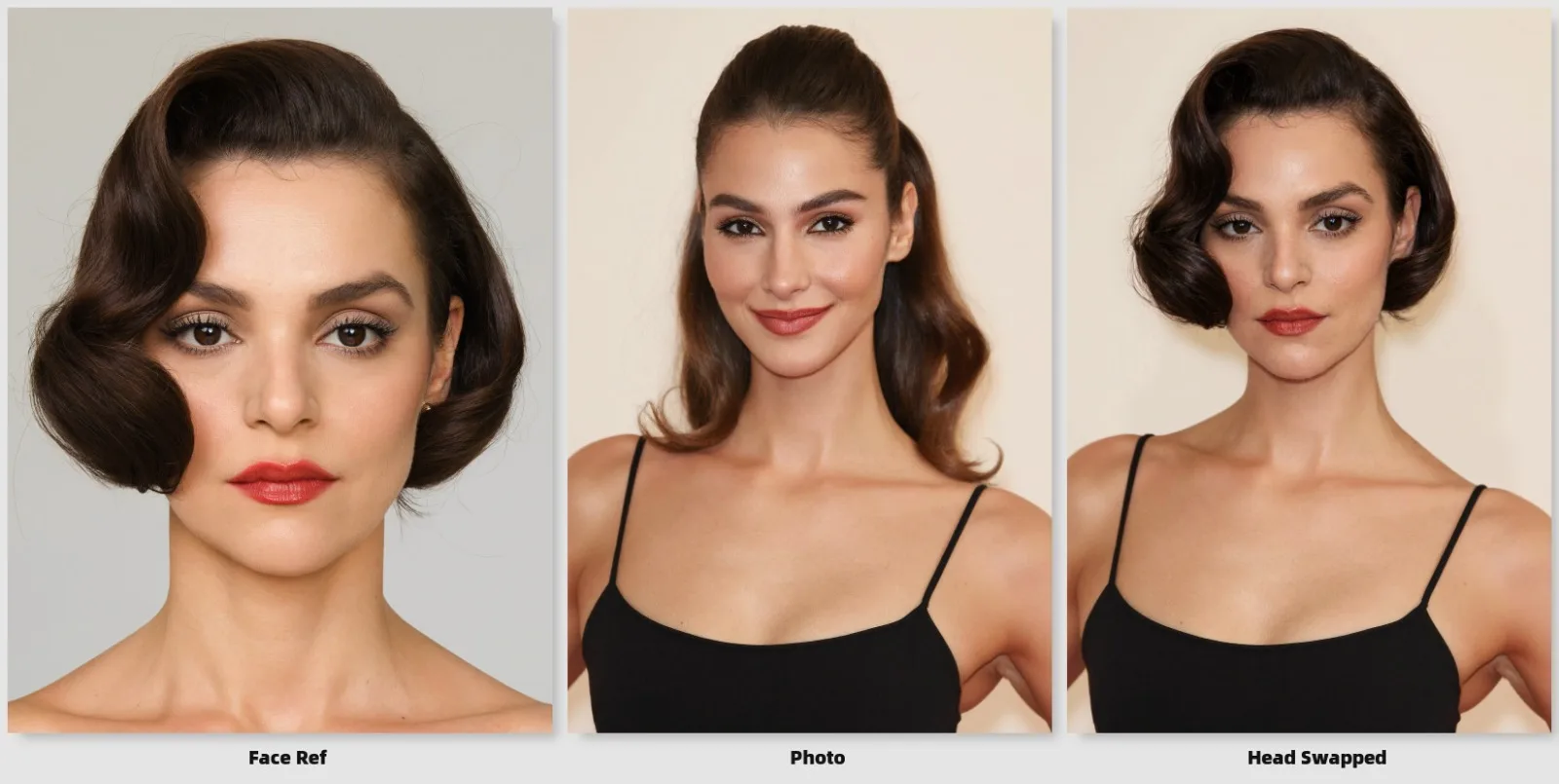
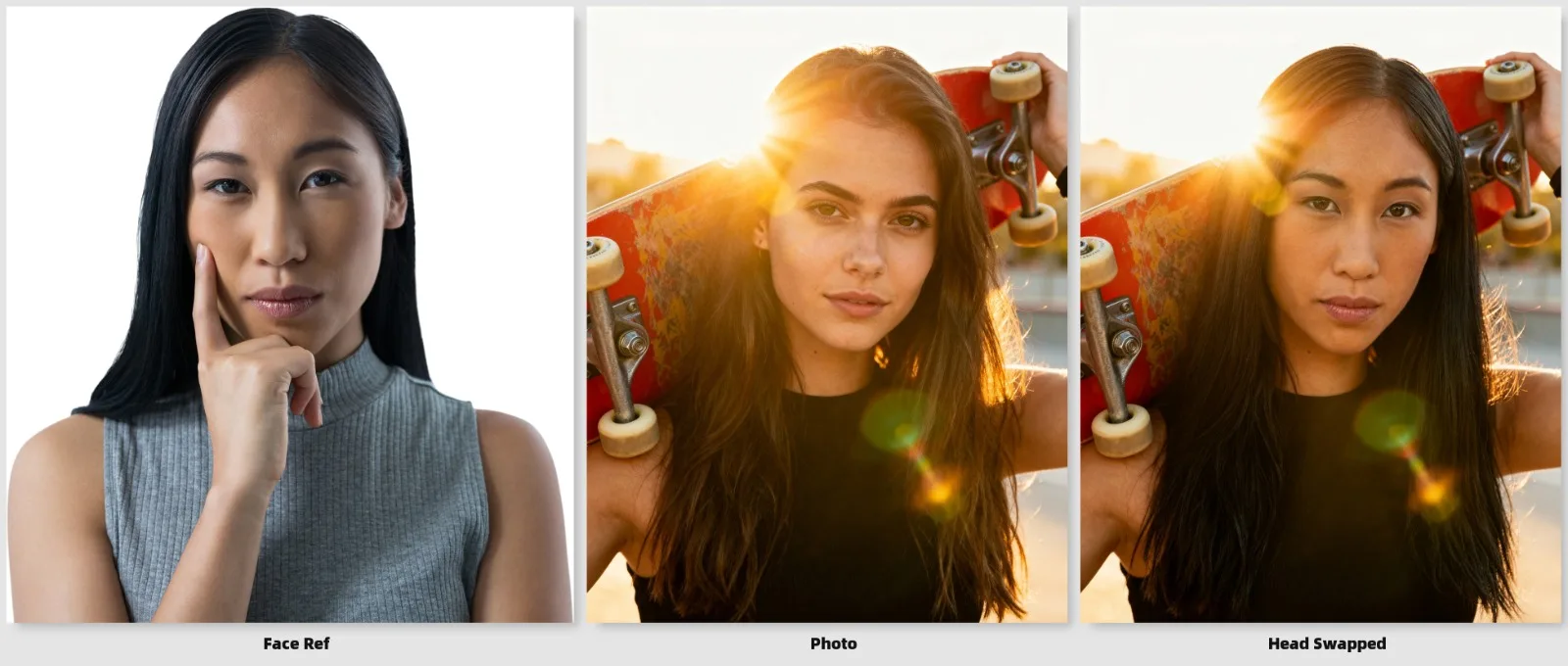
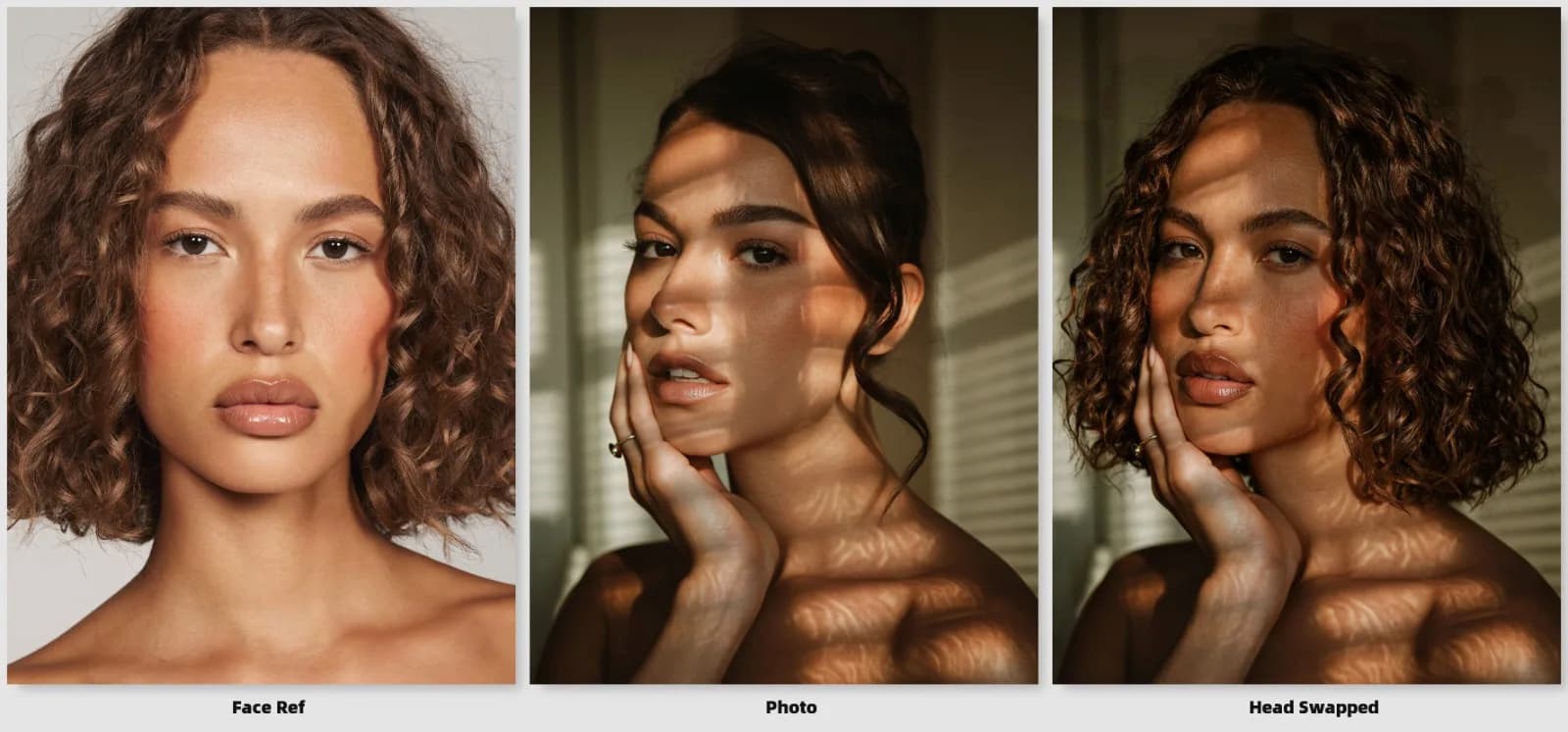
AI model swap replaces who the person is in an approved fashion image. The garment, pose, light, background and crop stay as they were shot. Only the identity changes. Vendors call it model swap, face swap or head swap. The difference is how much of the person changes.
| Technique | What changes | What stays | Typical fashion use |
|---|---|---|---|
| Face swap | Facial features | Hair, head shape, body, garment, pose, light | Subtle identity change where the hairstyle is part of the look |
| Head swap | Whole head: face, hair, ears, outline | Body, garment, pose, light, background | A different person in the same frame; hair that suits a market or a house identity |
| Model swap (vendor term) | Face, hair, sometimes skin tone or body | Garment, pose, light, background | Catch-all term used by most tools |
All three are AI edits of a real image, so consent, tags and labels apply to all of them. Some tools also change body type or skin tone. Treat that as a bigger change: the EU Commission lists altering body shape or skin colour among changes that need marking (see EU AI Act and AI fashion product images), and the garment then sits on a different body than the one that wore it.
Keeping one face steady while you generate new images is a different job, covered in fashion AI identity lock. Changing the garment colour while the person stays is AI colourway swaps.
Why catalogue teams swap models
Most swap programmes come from one of four jobs. Each keeps the approved garment frame and changes only who is wearing it.
Localise a catalogue for new markets
One approved shoot can carry different, consented identities for different storefronts without rebooking a studio day. Fit, drape and the garment stay as photographed.
Hold one house identity across SKUs
Supplier imagery and older shoots often show many different models. Swapping to one consented or brand-owned synthetic identity makes the grid read as one brand. Keeping that identity steady afterwards is the identity lock job.
Reuse an approved shoot when the original terms end
On-Model's marketplace case page names expiring model usage licences as one reason marketplaces swap. Reusing the frame with a new identity is only clean if the original model's agreement allows AI alteration of their images. In New York it needs fresh written approval (see the consent section below).
Campaign families that share catalogue frames
When a campaign needs the catalogue's identity, or a new face across existing frames, the swap rules travel with the brief. See AI campaign image families.
When not to swap
If the source image hides or distorts garment detail the output must show, a swap won't create it. If the job is a new pose, new set or new art direction, it's generation or a shoot, not a swap. See when not to use AI fashion images.
Consent covers two people, not one
Most tool pages ask whether you have rights to the face you upload. In a fashion swap there are two people:
- The model in the original photo. Their body, pose, hands and styling stay in the frame. Their image is being altered and reused, often for a use they never agreed to.
- The identity going in. A real person whose face or head you place on the frame, or a synthetic identity.
New York's Fashion Workers Act already treats this as a written-consent question. Since 19 June 2025, clients must “obtain clear written approval from a model before creating or using the model's digital replica”, and that approval must cover the scope, purpose, rate of pay and length of time the replica will be used (NY Department of Labor FAQ). The same FAQ answers the reuse case directly: a brand that wants to alter photos from a past shoot with AI for a new campaign needs new approval if the original approval didn't cover it. The law's definition of a digital replica excludes routine edits like colour correction and minor retouching. Identity replacement isn't routine.
Other places have their own likeness and publicity rules. Don't treat New York as the ceiling. Use it as the shape of a good consent record. When the question is whether an existing release covers AI edits at all, start with model releases and AI consent for fashion brands.
The brand supplies the models and confirms their consent; 8M Studio does not source faces.
"We're an AI-native service business. We're not an app, and we're not a generic IT services shop."
The consent checklist (use it before any swap)
Every swap needs all of these, in writing, before production:
- Written consent from the original model for AI alteration of their images and for this specific use (campaign, market, channel, duration).
- Written consent and usage rights for the incoming identity, with the same scope, purpose, pay and duration. If it's a synthetic identity, record who created it, that it isn't based on a real person, and that the brand owns or licenses it.
- Adults only. No one under 18 in either image. If age is unclear, don't swap.
- No celebrities, public figures or lookalikes. Don't place a recognisable person's likeness on a frame, and don't brief a synthetic face to resemble one.
- No impersonation. The output must never present a real person as having worn, endorsed or modelled something they didn't.
- Agency terms checked. Model agreements and agency contracts may restrict AI alteration or digital replicas.
- Revocation and takedown path. Know which images use which identity, so you can pull them if consent ends.
- A record per image. Source file, incoming identity, consent reference, date, channels. You'll need it for the tags and labels below too.
Model-swap consent and disclosure pre-flight
Answer eight questions about the images you plan to swap. Nothing is uploaded and your answers stay in the browser. The result tells you whether to stop, which tags and labels to plan for, and whether a self-serve tool or a governed programme fits. The logic table under the checklist shows exactly how it decides. Not legal advice.
| Answer pattern | Result |
|---|---|
| Q1 or Q2 = no or unsure | Stop. Get written consent from both people first. |
| Q3 = no or unsure | Stop. Consent doesn't cover this use. Get new approval. |
| Q4 = yes or unsure | Stop. No minors, celebrities, public figures or lookalikes. |
| Q5 = yes and Q6 = yes | Amazon: tag contains-synthetic-performer (conservative reading for an AI face on a real body). |
| Q5 = no (consented real person) or unsure, and Q6 = yes | Amazon: grey zone. Get a legal read and record the decision. |
| Q7 = yes | Google: embed and preserve IPTC DigitalSourceType; agree the value with feed ops. |
| Q8 = yes | EU: plan a visible label at first exposure; face replacement is listed by the Commission as needing marking. |
| Q6, Q7 or Q8 = unsure | Read as yes: plan that channel's tag or label until you know. |
| Few images, clear rights | Routing line: a self-serve tool is a reasonable fit. |
| Many SKUs, several markets or one house identity | Routing line: a governed programme with QC and a consent record fits better. |
See identity-only change in practice: try the alpha demo on Hugging Face. Upload the photo to change and the new head; pose, lighting, garment and composition stay as they are. It's an alpha, so results vary, and it's not a production deliverable. Only upload photos of people who have given consent.
Not legal advice. A starting point for your counsel.
Amazon: does a swapped image need the synthetic-performer tag?
Amazon asks sellers to add the keyword contains-synthetic-performer to the XMP dc:subject metadata of images showing a photorealistic person generated entirely by AI. A swap sits in the grey zone between “real person” and “entirely AI”, so read it carefully:
- Synthetic identity on a real model's body. The body, pose and garment are real, but the face isn't a real person. Our Amazon AI-generated model image guide treats this as “AI face on a real body”: the conservative reading is to tag it, and if you choose not to, have counsel sign off and keep the reasoning.
- A consented real person's head on another real model's body. Amazon ties the tag to people “not based on a real person”, so this may fall outside it, but other likeness and consent rules apply. That needs a legal read, recorded per image set.
- Same model, retouched or cleaned up. Not a swap. Real models with standard retouching don't need the tag.
How to write the tag in bulk (ExifTool, built-in tools, retroactive audits) is in the Amazon guide, so it isn't repeated here.
Google Shopping: DigitalSourceType on swapped images
Google Merchant Center Help says images created using generative AI must carry IPTC DigitalSourceType metadata, and that the tag must not be removed. It names three values to preserve: TrainedAlgorithmicMedia, CompositeSynthetic and AlgorithmicMedia.
A swap is a generative edit inside a real photograph, not a fully generated image. IPTC's vocabulary has values for that: compositeSynthetic (“mix or composite of several elements, at least one of which is Generative AI”) and compositeWithTrainedAlgorithmicMedia (“augmentation, correction or enhancement using a Generative AI model, such as with inpainting”). Agree the value with your feed ops and counsel against the current Help article, write it before upload, and check it survives your CDN. Why tags get stripped and how to check the live image_link is in our Google Merchant Center AI product images guide.
Amazon's tag and Google's field are different metadata. An image sold on both channels may need both.
"Brands shouldn't have to juggle Shopify vs Amazon vs marketplace image rules themselves. We already have the tools — and we'll keep building them — so we optimise the images to those channel rules for them, instead of leaving the brand to DIY it."
EU shoppers: Article 50 and face replacement
From 2 August 2026, EU AI Act Article 50 splits two duties. The AI provider marks generated or manipulated images in a machine-readable way. The deployer, usually the brand that publishes the image, must visibly disclose deepfakes at first exposure.
A face or head swap is the clearest fashion case. The Commission's guidelines list “face replacement or substantial facial modification” among changes that require marking, and its “Partially AI-Modified” icon example is a face swapped into an authentic photograph. A swapped catalogue image shown to EU shoppers is therefore likely to need a visible label, not just embedded metadata. The Commission also says deployers can't rely on the provider's machine-readable mark to meet the visible-label duty.
UK and US brands are in scope where they foresee EU use of the output. Where to put the label without breaking Merchant Center's overlay rules is in our EU AI Act and AI fashion product images guide.
| Swap route | Amazon tag | Google DigitalSourceType | EU visible label (if EU exposure) |
|---|---|---|---|
| Synthetic identity on real model's body | Conservative reading: tag | Yes: preserve an AI value agreed with feed ops | Likely yes |
| Consented real person's head on real model's body | Grey: legal read | Yes: it's a generative edit | Likely yes |
| Same model, retouch or background only | No | Only if generative AI was used | Usually no for standard edits |
A swap must not touch the garment
The shopper buys the garment, not the face. A swap that moves a neckline, softens a print, shifts the colour, smooths a closure or changes how the fabric drapes at the collar is a failed frame, however good the face looks. Hair is the usual risk: a new hairstyle can cover a collar, hood or earring that the product page needs to show.
Check every swapped frame against the original for garment truth first, identity second. Use the AI fashion imagery QC checklist and score the swap batch on first-pass acceptance so you can see what review actually costs.
Hard cases for any swap route: strong head turns, hands near the face, hats and hoods, long hair over the garment, glasses, and mismatched light between source and new identity. Route those to human review rather than passing them through.
"After generation, an agent tool checks the garment against the reference — layout, logos, QC. If those are wrong, the image goes back for rework. Frames that pass go to our retouching partners for the final clean. Nothing ships until that retouch pass is done."
Self-serve swap tool or a governed programme
Self-serve tools (WearView, FASHN, On-Model, Modelia and others publish model-swap features) are the better pick when you need a few images fast, can review them yourself, and already hold clear rights. They're instant, cheap to start and need no brief. A managed studio is slower to start and isn't built for a single swap.
A governed programme fits when the swap runs across hundreds of SKUs, several markets or one house identity, when someone has to keep the consent record per image, and when every frame needs tags, labels and garment QC before it ships.
| You have | Self-serve swap tool | Governed programme |
|---|---|---|
| A few images, clear rights, your own reviewer | Better fit | More than you need |
| Hundreds of SKUs, one house identity | Possible, but you own drift, QC and records | Better fit |
| Several markets and channels (Amazon, Google, EU) | You own tags, labels and checks per channel | Tags and labels built into delivery, when in scope |
| Consent records per image | You build and keep them | Kept as part of the programme, when in scope |
| Need it in minutes | Better fit | Not designed for that |
Where 8M Studio fits
8M Studio is a managed AI fashion production studio for US, UK and EU brands, not a self-serve app. Head and face swap is one capability inside our Custom AI Production Systems, used when a catalogue or campaign programme needs identity work under agreed rules. It isn't sold as a separate product.
On a confidential studio-partner catalogue programme, a studio-operated head-swap route supports around 8k images a month with human QC gates for identity, garment fidelity and continuity. See the head-swap catalogue case study. That figure is proof for that programme, not a forecast for every workflow. Where channel delivery is in scope, we can add the Amazon tag, DigitalSourceType and label-ready files as part of delivery.
If you want to see identity-only change first, try the alpha demo on Hugging Face. When you're ready to scope a programme, book a production-fit call.
Buyer checklist before you swap a catalogue
Work through these in order before the first image is swapped. Each step is something a reviewer can check later.
- 1. List the images and the reason for each swap (market, house identity, reuse).
- 2. Collect written consent from every original model for AI alteration and this use.
- 3. Collect written consent and rights for each incoming identity, or document the synthetic identity.
- 4. Remove anything with a minor, public figure or lookalike.
- 5. Check agency and model agreements for AI or digital-replica limits.
- 6. Decide per channel: Amazon tag, Google DigitalSourceType value, EU visible label.
- 7. Run a pilot on hard frames (head turns, hair over collars, hats) and score garment truth first.
- 8. Keep a per-image record: source, identity, consent reference, channels, labels.
- 9. Decide who owns QC and the record: you, a tool, or a studio.
Not legal advice. Confirm consent and labelling decisions with your counsel.
Frequently asked questions
What is AI model swap in fashion?
AI model swap replaces the identity of the person in an existing fashion image while the garment, pose, light and framing stay as shot. Face swap changes facial features; head swap replaces the whole head including hair. Both are AI edits, so consent and disclosure rules apply.
Can I reuse an old photoshoot with a new model's face?
Only if the original model's written consent covers AI alteration and the new use. New York's Fashion Workers Act requires fresh written approval when earlier approval didn't cover the new campaign. Get consent from the incoming identity too.
Whose consent do I need for a head swap?
You need written consent from two people: the model whose body and pose stay in the photo, and the person whose face or head goes in. If the incoming identity is synthetic, document that it isn't based on a real person and that you own or license it. The brand supplies the models and confirms their consent; 8M Studio does not source faces.
Can I swap in a celebrity or a lookalike face?
No. Don't place a celebrity's, public figure's or lookalike's likeness on fashion images, and don't brief a synthetic face to resemble one. It risks impersonation and likeness claims, and it misleads shoppers.
Does a swapped image need Amazon's contains-synthetic-performer tag?
It depends on the incoming identity. A synthetic face on a real body is a grey zone where the conservative reading is to tag. A consented real person's head on another real body needs a legal read. Our Amazon guide covers how to add the tag in bulk.
Which DigitalSourceType should a swapped image carry for Google Shopping?
Google requires DigitalSourceType on images created with generative AI and asks you to preserve it. A swap is a generative edit in a real photo, so IPTC's composite values are the closest match. Agree the value with feed ops against the current Help article.
Is a face swap a deepfake under the EU AI Act?
Likely yes, when shown to EU shoppers. The Commission lists face replacement among changes that require marking, and its “Partially AI-Modified” example is a face swapped into an authentic photo. The brand publishing it should plan a visible label at first exposure.
Should I use a self-serve swap tool or a managed studio?
Use a self-serve tool for a few images with clear rights and your own reviewer. Use a governed programme when swaps run across hundreds of SKUs, several markets or one house identity and someone must own consent records, tags, labels and garment QC.
Evidence and sources
- New York State Department of Labor — Fashion Workers Act - Overview; client duties apply from 19 June 2025. Checked 9 October 2026.
- New York State Department of Labor — Fashion Workers Act FAQs - Written approval for a digital replica covering scope, purpose, rate of pay and duration; new approval when earlier approval didn't cover a new campaign, including AI alteration of past-shoot photos. Checked 9 October 2026.
- New York State Department of Labor — Fashion Workers Act definitions - Digital replica definition; routine edits excluded. Checked 9 October 2026.
- New York General Business Law § 396-b - Synthetic performer disclosure in advertising. Checked 9 October 2026.
- Amazon Seller Central Help — synthetic performer tag - The contains-synthetic-performer keyword in XMP dc:subject. Checked 9 October 2026.
- Google Merchant Center Help — AI-generated content - Generative-AI images must carry IPTC DigitalSourceType; preserve TrainedAlgorithmicMedia, CompositeSynthetic and AlgorithmicMedia. Checked 9 October 2026.
- IPTC — compositeWithTrainedAlgorithmicMedia - Augmentation, correction or enhancement using a generative AI model, such as inpainting. Checked 9 October 2026.
- IPTC — compositeSynthetic - Mix or composite of several elements, at least one of which is generative AI. Checked 9 October 2026.
- EUR-Lex — Regulation (EU) 2024/1689 - EU AI Act, Article 50 transparency obligations. Checked 9 October 2026.
- European Commission — guidelines on transparency of AI-generated content - Face replacement listed among changes that require marking. Checked 9 October 2026.
- European Commission — EU icons for labelling AI-generated content - The “Partially AI-Modified” icon example. Checked 9 October 2026.
- 8M Studio — head and face swap alpha demo on Hugging Face - Alpha demo; results vary and it is not a production deliverable. Only upload photos of people who have given consent. Checked 9 October 2026.
Continue the decision
Swapping models across a catalogue? Scope it with consent first.
Bring a representative image set, the identities you have rights to, and the channels you sell on. We'll check fit, consent and disclosure before anything is produced. Want to see identity-only change first? Try the alpha demo on Hugging Face.
Need this done for your catalogue?
Send your product photos and we return reviewed, ready-to-publish images.
Start a brief