AI fashion tools vs managed production · 12 min read
AI Fashion Tools vs Managed Production: When Each Route Fits
A criteria-first comparison of self-serve AI fashion image tools and a managed catalogue or campaign studio. Decide by QC ownership, garment fidelity, SLA, identity, campaign coherence, data handling, and cost per approved SKU—not by generation credits.
By Surajnarayanan SUpdated
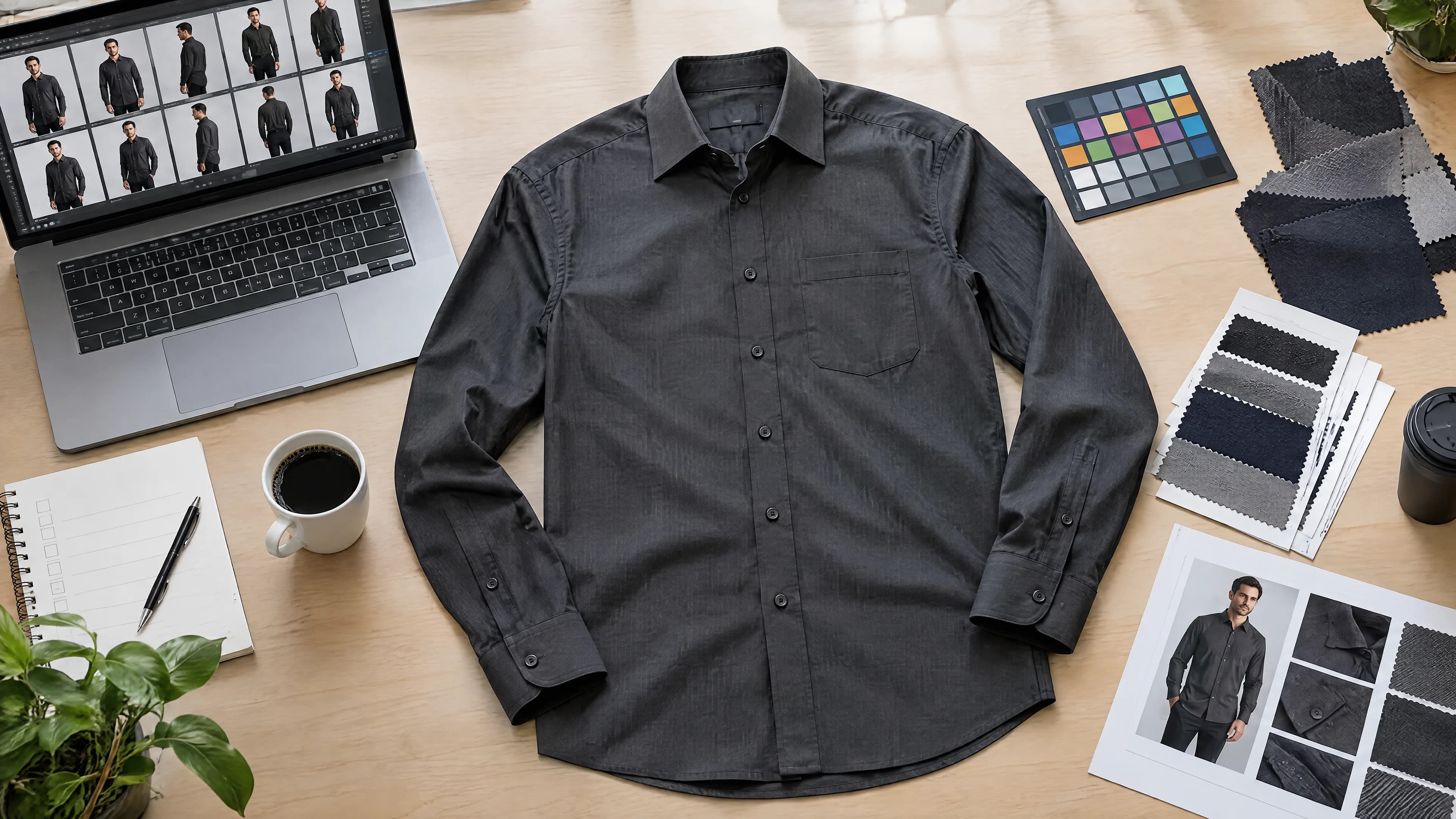
At a glance
- Tools win speed and control for skilled internal operators on contained tests.
- Managed studios win recurring volume under brand rules and SLAs.
- Decide on QC ownership, fidelity hold, and cost per approved SKU—not sticker price.
8M Studio is a managed production studio, not a self-serve AI tool. This guide is still useful if you compare other suppliers and do not hire us.
Direct answer
Self-serve AI fashion tools fit when your team can operate generation, review every output, and absorb corrections in-house—especially for low-risk tests or simple SKUs. A managed production studio fits when catalogue or campaign volume needs locked product truths, human QC before publish, identity consistency, and one accountable delivery owner. Compare routes by cost and time per approved SKU—including QC and exceptions—not by generation credits. 8M Studio is a managed production studio, not a self-serve image tool.
Best for
- +Buyers torn between Botika, Claid, WearView, Photoroom or Voidwear-class tools and a studio programme
- +Catalogue or campaign leads who need criteria for an RFP or vendor shortlist
- +Teams that already tried DIY AI and hit fidelity, identity or review-bandwidth walls
Not designed for
- -A best-AI-tool ranking listicle with invented scores
- -Consumer try-on or selfie face-swap use cases
- -A universal rate card or a free-trial signup funnel
The decision you are actually making
The useful question is not which tool looks coolest. It is which operating model owns intake, generation, quality control, exceptions and channel delivery. Commercial buyers pay for approved, publishable images under brand rules—not for a generation credit.
Self-serve AI fashion tools such as Botika, Claid, WearView, Photoroom, Voidwear and similar on-model or Flair-class products are category examples buyers already search. They are not ranked here. This page does not invent their prices, accuracy percentages, speed claims or feature matrices.
Botika versus managed AI fashion production is an ownership question: who reviews, who handles exceptions, and who stands behind approved delivery. A Claid, WearView, Photoroom or Voidwear alternative for a brand is a managed studio programme if you need accountability and SLAs, or a tool if you need DIY speed with internal review. There is no universal best AI tool for ecommerce clothing images; use the criteria table below.
If you already run Botika and are deciding whether to stay, upgrade or switch, our Botika alternative guide walks through all four routes with a short quiz.
This guide helps you choose a route even if you do not work with 8M Studio. When the job is mixed supplier or wholesale packshots becoming one on-model PDP book, the operating guide is supplier packshots to on-model PDP images. This page stays the general chooser. Named criteria for Botika and Claid, as self-serve exemplars rather than ranked opponents, are in Botika and Claid versus managed fashion production. Named criteria for WearView and On-Model, in the same way, are in WearView and On-Model versus managed fashion production. Shopify brands that need batch on-model PDPs on a drop calendar should read Shopify batch on-model AI product photos. When the job itself is catalogue volume versus a launch family, the route chooser is AI campaign vs catalogue production. When the prior question is whether this brief should use AI at all, the decision boundary is when not to use AI fashion images. When buyers mix a shopper try-on with finished on-model assets, the route distinction is virtual try-on vs on-model catalogue imagery. When the commercial question is a fashion shoot versus a managed AI programme, the cost-driver comparison is fashion shoot cost vs AI production.
Operating model / Not a winner badge
Two routes, two different owners
Choose by who operates the line and who is accountable when a SKU must be held.
Self-serve tool
Your team operates generation, retries, review, file prep and exceptions.
Managed studio
A production partner operates the agreed route and human QC; you own brief, product-truth rules and final acceptance.
What you are buying
Accountability and reviewed delivery—not a cheaper credit pack or a cooler interface.
ControlCompare cost and time per approved SKU, including QC and exceptions, not generation credits alone.
What self-serve AI fashion tools are good at
Self-serve tools fit when the work is contained and the operators are skilled. They can be the right first route for a low-risk test, a simple SKU family, or an internal experiment where the brand already owns review.
Speed is real when the brief is narrow: a small view set, ordinary garments, and a reviewer who can reject bad frames the same day. Internal control is the other advantage. Your team keeps prompting, model choice, retry loops and file prep in-house.
Credit-pack economics look attractive when you count only generation. They omit operator time, retry volume, review bandwidth, exception repair and channel packaging. A low unit credit is not the cost of an approved SKU. Name the tools you evaluate as a category, then score them on the same acceptance criteria you would give a studio.
What a managed production studio is for
A managed studio is for recurring catalogue and campaign programmes, not a DIY dashboard. The production partner operates the workflow within an agreed scope and service level. The brand owns the brief, product-truth rules and final commercial acceptance.
Human QC gates sit before publish: colour, silhouette, print, lace, embroidery, trims and variant identity are checked against hold criteria. One accountable delivery owner handles turnaround, batch cadence, exceptions and rework rules so a failed SKU has a named next step.
8M Studio's managed route is AI Catalogue Production for recurring on-model and packshot programmes, Campaign Production when families and coherence matter, and Custom AI Production Systems when a bottleneck needs a governed pipeline. None of those is a self-serve image tool.
Files still have to meet the channel they ship on. The matrix is fashion image guidelines by channel. A photorealistic AI model sold on Amazon also needs the metadata keyword in Amazon's guide to AI-generated model images. Approved write-ups of studio-operated programmes, without a client name, are on the case studies page.
"ChatGPT gives you an image. Managed production gives you the whole pipeline: QC, retouching, and someone owning 200–500 SKUs end to end. That needs systems, creatives and Photoshop retouchers — which is why it costs more than credits alone, and why the output is catalogue-ready."
Comparison criteria that matter
Use the same seven criteria for every vendor, whether the quote is a software subscription or a studio programme. Fair language only: this table describes typical operating models. It is not a scored leaderboard and it does not assign invented stats to named tools.
| Criterion | Self-serve AI tools (typical) | Managed production studio (typical) | What to ask before you buy |
|---|---|---|---|
| QC | Buyer reviews; volume becomes a review-bandwidth risk | Human review gates before delivery within scope | Who signs off? Accept, rework and hold rules? First-pass approval target? |
| Fidelity | Tool output varies; hard garments can fail silently | Product-truth rules and hold criteria for print, lace, trims and silhouette | Which product truths cannot change? Will the pilot include difficult SKUs? |
| SLA | Uptime and credits; delivery speed depends on the operator | Agreed turnaround, batch cadence and exception handling | What is in scope versus out of scope? What happens when inputs fail? |
| Identity | Per-image model choice; consistency is a DIY job | Identity lock or a governed model set across the catalogue | Same talent across SKUs? Who owns identity assets and rights? |
| Campaign coherence | Strong for one-offs; weak for families without art-direction ops | Campaign families under brief, pose and set rules, and continuity | PDP packs only, or a multi-asset campaign system? |
| Data handling | Upload to a vendor cloud; check terms, training use and retention | Contracted handling, retention and commercial disclosure norms | Where do files live? Training use? Gen-AI labelling for channels? |
| Cost per approved SKU | Low generation cost; easy to miss retry and review labour | Higher unit look; includes the operated route and QC within scope | Price the approved unit including corrections—not credits alone |
Decision tree: which route should you choose?
Self-serve versus a studio is not a brand-preference vote. Match the workload you actually have to the owner you need. A managed fashion AI studio is worth it when recurring volume and brand rules make review bandwidth and fidelity risk more expensive than a credit pack.
| If you have | You likely need | Watch for |
|---|---|---|
| Skilled internal ops and low-risk tests | A self-serve tool trial | Review bandwidth and hard garments |
| Recurring catalogue volume and brand rules | A managed catalogue programme | QC gates, SLA and fidelity holds |
| Campaign families or lifestyle systems | Managed campaign production | Art-direction lock and coherence |
| Identity consistency across hundreds of SKUs | Managed production plus custom systems for identity | Rights, governed swap, not ad-hoc faces |
| Unclear inputs or mixed libraries | An input review first, on either route | Incomplete packs break both models |
Failure modes buyers discover too late
Pretty samples are not a batch approval rate. A polished hero can hide a route that fails once print, lace, dark fabric or unusual trims enter the real catalogue. Score first-pass approval on ordinary difficult SKUs, not on a hand-picked demo set.
Print, lace and trim drift is the fidelity failure that shows up after publish. If a product truth cannot change, it needs a hold rule and a reviewer who can stop the SKU. Hard garments should appear in any paid pilot. The pattern is set out in why DIY AI fashion images fail on garment fidelity. Images that continue to Shopping need a separate metadata check in Google Merchant Center AI product images.
Exceptions need an owner. When a SKU must be held, someone has to record why, request a better input, correct the frame or reject it. A tool trial that leaves that queue with merchandising is not cheaper; it is unfinished production.
Campaign assets that do not match PDP identity or lighting rules create two catalogues. If you need families, lock pose, set, colour and talent rules before volume. Coherence is an operating job, not a filter preset.
How to run a fair pilot on either route
Send the same brief, the same difficult SKUs and the same acceptance criteria to every tool and every studio you evaluate. Include ordinary products and the garments that usually fail: print placement, lace, embroidery, reflective trims, dark materials and incomplete packs.
Measure approved output and correction load. Record first-pass approval, who owned each retry, hold reasons and time-to-publishable file. Then price recurring volume from that evidence, not from a credit sticker or a studio day-rate taken in isolation. How to measure that first pass on hard SKUs, and what it does to the bill, is in first-pass acceptance rate for AI fashion images.
Cost-per-approved-SKU thinking is the same discipline used in the fashion ecommerce pricing guide: total external fees plus internal labour plus corrections, divided by approved SKUs. This page does not publish an 8M rate card.
Pilot / Same brief
From a fair test to a recurring rate
Tools and studios should face the same SKUs and the same definition of approved.
Lock the brief
Views, product truths, channels and accept / rework / hold rules before anyone generates.
Score approved output
First-pass approval, correction owner, hold reasons and time to a publishable file.
Price from reality
Extrapolate recurring volume from observed retry and review load, not from credits.
ControlA quote is comparable only after the same brief and difficult SKUs have been tested.
Where 8M Studio fits
8M Studio is not a self-serve AI tool. There is no DIY credit dashboard. Clients brief inputs and acceptance criteria; the studio operates production and human QC within an agreed scope.
AI Catalogue Production covers recurring on-model and packshot programmes. Campaign Production is for families that must stay coherent. Custom AI Production Systems is for bottlenecks that need a governed pipeline rather than a one-off batch. When drop cadence outruns review, the diagnosis is the fashion catalogue production bottleneck guide. When one model must stay recognisable across SKUs, the operating note is fashion AI identity lock.
AI head swap is a governed identity-replacement capability inside custom systems when a catalogue needs a locked talent likeness. It is not the product on this page, not a consumer face-swap, and not a reason to skip QC or rights questions.
Managed programmes can run at around 8k images a month in studio-partner-style pipelines. That figure describes operating scale, not a capacity promise for every brief, and it does not name partners.
If you are comparing self-serve AI fashion tools with a managed programme and need reviewed catalogue or campaign delivery, start with a representative input review. Book a production-fit call when the batch is easier to explain live.
Buyer checklist before you commit volume
- Send the same brief to every vendor: views, product truths and destination channels.
- Name who owns QC and exceptions, including accept, rework and hold.
- Price cost per approved SKU, including retries and review labour.
- Write the SLA, in-scope work and hold rules before the first batch.
- Confirm identity lock and commercial rights if talent likeness is involved.
- Record data handling, retention, training use and gen-AI disclosure for each channel.
- List what remains after handoff: files, prompts, model IDs and QC logs.
Before volume / Control sheet
Commit only after these lines are named
A comparable vendor choice makes ownership and the approved unit explicit.
Shared brief
Views, truths and channels identical for every tool and studio in the shortlist.
QC owner
Who signs off, who reworks, and who holds a SKU that cannot be verified.
Approved-unit price
Generation, retries, review and exceptions inside the number you compare.
Handoff remainder
Files, rights, provenance metadata and logs the brand still has to keep.
ControlIf a line cannot be compared, record the assumption before committing recurring volume.
Frequently asked questions
When should I use a self-serve AI fashion tool vs a managed studio?
Use self-serve when your team can operate generation and review in-house on low-risk work or simple SKUs. Use a managed studio when catalogue or campaign volume needs brand rules, human QC, and one accountable delivery owner more than a low credit price.
Is 8M Studio a self-serve AI tool?
No. 8M Studio is a managed AI fashion catalogue and campaign production studio. Clients brief inputs and acceptance criteria; the studio operates production and human QC within an agreed scope. There is no DIY credit dashboard.
Are Botika, Claid, WearView, Photoroom, or Voidwear bad options?
Not inherently. They represent the self-serve tool category many buyers already evaluate. Fit depends on your operators, garment difficulty, and who owns QC—not on listicle rankings. We do not publish unverified competitor prices, accuracy scores or speed claims.
What should I compare besides price per image?
Compare QC ownership, garment fidelity holds, SLA and exceptions, identity consistency, campaign coherence, data handling, and cost per approved SKU including review labour. A generation credit omits retries, operators and the work needed to publish.
Can AI tools replace a fashion photoshoot entirely?
Sometimes for defined catalogue views from strong inputs; rarely for open-ended campaign direction or when product truth is unresolved. Treat AI as a production route with acceptance criteria, not a universal shoot replacement.
How do managed studios handle garment fidelity?
By locking product truths such as colour, silhouette, print, lace, embroidery and trims, then reviewing outputs against hold criteria before delivery. Hard garments should appear in any paid pilot so silent drift is found before volume.
What is cost per approved SKU?
The fully loaded cost of an image or SKU set that passes commercial acceptance, including generation, retries, human review and exception handling. It is not the headline credit price or an 8M Studio rate card.
Do I need identity lock for my catalogue?
If the same talent or model must appear consistently across many SKUs or seasons, yes—plan identity as a governed capability, not per-image random faces. Ask who owns model assets and commercial rights before volume starts.
How should I pilot before scaling?
Send the same brief and a mix of ordinary plus difficult SKUs to each route. Score first-pass approval rate, correction ownership and turnaround, then price recurring volume from that evidence rather than from a demo set.
Where does ghost mannequin or on-model conversion fit in this choice?
Those are production destinations inside either route. Use the ghost mannequin chooser and the mannequin-to-on-model guide for method detail; use this page to choose a tool versus a managed operating model.
Evidence and sources
- Commerce images must accurately display the product and meet channel image requirements. Verified 2026-08-05.
- Google requires generative-AI product images used in Shopping data to retain the IPTC DigitalSourceType TrainedAlgorithmicMedia metadata tag. Verified 2026-08-13.
- Google Merchant Center image requirements - Primary channel guidance requiring product images to represent the item accurately.
- Google Merchant Center product data specification update - Primary guidance for generative-AI image provenance metadata in Shopping data.
- 8M Studio AI Catalogue Production - Managed catalogue production route used as the studio's recurring on-model and packshot starting point.
Continue the decision
Need reviewed catalogue or campaign delivery?
If you are comparing self-serve AI fashion tools with a managed programme, start with a representative input review. Book a production-fit call when the batch is easier to explain live.