AI colorway swaps for on-model catalogue · 11 min read
AI Colorway Swaps for On-Model Catalogue: A Buyer Decision Guide
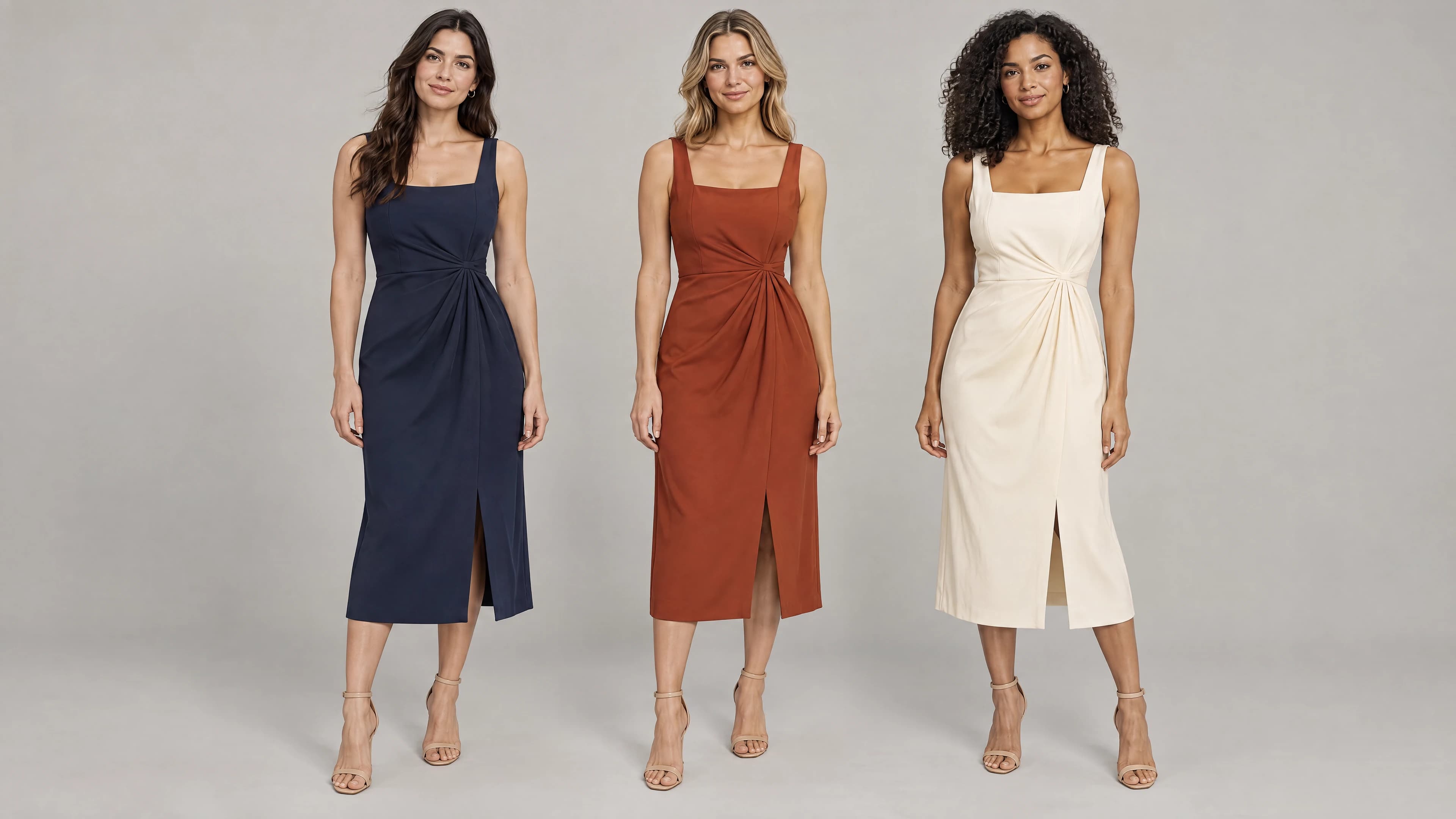
AI colorway swaps fit an on-model catalogue when hero colours have approved on-model frames and secondary colourways are stuck as flat-lay, ghost, or placeholder. A usable swap locks true colour against the garment and swatch—not a hex or Pantone label alone—and keeps fabric behaviour (sheen, texture, drape) instead of tinting one photo. A DIY swatch-recolor tool can draft options; a managed programme approves them under Accept, Rework, or Hold. This is a coverage decision, not a savings claim.
By Surajnarayanan SUpdated
At a glance
- Use AI colourway coverage when secondary colours lack on-model frames the PDP needs
- QC true colour and fabric behaviour — a hue-shift is not a colourway
- DIY recolor drafts; managed Accept / Rework / Hold owns what ships
8M Studio is a managed production studio. It is not a self-serve swatch-recolor tool. This page is a colourway coverage decision, not a savings claim.
Direct answer
Use AI colorway coverage when five conditions are true. The hero colour already has an approved on-model look the line can share. Secondary colourways are commercially live but still flat-lay, ghost, or placeholder. The PDP or marketplace expects an on-model frame per sellable colour, not only a swatch chip. Colour and fabric can be checked against the real garment or a controlled swatch, not a hex guess. Someone owns Accept, Rework, or Hold before frames publish.
Best for
- +Merch and ecommerce production leads deciding whether secondary colourways should be on-model
- +Teams whose hero colours are fully shot and the rest of the line is flat-lay, ghost, or placeholder
- +Buyers who need a colour QC standard before a catalogue production call
Not designed for
- -A rehash of why DIY AI fails on lace, print, or construction
- -Virtual try-on versus catalogue on-model, beyond a one-line distinction
- -Identity lock or casting as the product
- -Invented prices, ROI, savings percentages, or best-tool rankings
- -Consumer colour-filter tutorials
Answer first: when colorway coverage belongs in catalogue production
Hero colours often already have an approved on-model look. Secondary colourways are the ones left behind. Colourway coverage belongs in catalogue production only when the line can extend that look and someone can hold the result before it publishes.
- The hero colour already has an approved on-model look the line can share.
- Secondary colourways are commercially live but visually stuck as flat-lay, ghost, or placeholder.
- The PDP or marketplace expects an on-model frame per sellable colour, not only a swatch chip.
- Colour and fabric can be checked against the real garment or a controlled swatch — not a hex guess.
- Someone owns Accept, Rework, or Hold before frames publish.
How this page relates to on-model scale, the bottleneck, tools, and Shopping
Four companion pages already cover neighbouring jobs. This guide does not repeat them. It is the colourway coverage decision inside that catalogue job: hero on-model versus secondary colourways, and the QC that makes a swap a product image rather than a tint.
On-model at scale is the source route
Mannequin and flat-lay to on-model at scale is the route from mannequin or flat-lay sources into an on-model programme. This page does not restate that conversion. It starts after a hero look already exists.
The catalogue bottleneck is volume and review ownership
Fashion catalogue production bottleneck is the volume and ownership wall across the book: intake, QC, and who signs the work. This page does not restate that diagnosis. It asks which colourways should enter that book as on-model frames.
Tools versus managed is the operating model
AI fashion tools versus managed production is the general choice between self-serve generation and a studio operating model. This page does not restate that comparison. It applies the same split to a swatch-recolor draft versus a managed colourway programme.
Merchant Center is metadata when AI images go to Shopping
Google Merchant Center AI product images is the channel metadata and policy note when AI product images go to Shopping. This page does not invent a Shopping outcome. If colourway frames will run in a feed, confirm those rules there.
This guide is colourway coverage and colour QC
Use this page to decide whether secondary colourways stay packshot or ghost, or move into managed on-model coverage under a written colour and fabric hold. Three neighbouring decisions stay one line each. Print, lace, and construction failures are why DIY AI fashion images fail on garment fidelity. A shopper try-on is not catalogue on-model: virtual try-on versus on-model catalogue imagery. Identity lock is a different job from colourway coverage: fashion AI identity lock.
Hero colour versus secondary colourways
The split is a production fact buyers already live with. Hero colours get the on-model frames merch will publish. Secondary colourways wait, and placeholders ship because the drop cannot.
What full on-model usually means for the hero
Full on-model, for the hero, means an approved pose family, product truth, and a frame set merch will actually publish. That locked look is what a colourway can extend. A loose hero sample is not a look the line can share.
Why secondaries stall as flat-lay, ghost, or placeholder
Shoot calendars fill with heroes. Colourways wait. Flat-lay, ghost, or a placeholder ships because the drop date does not wait for another on-model day. The stall is coverage, not a claim about how often shoppers attach to a second colour.
When leaving them as packshot or ghost is still the right call
Do not force a swap. Colour-critical or construction-hard styles that cannot pass a colour hold should stay as they are. Ghost or flat-lay is enough when on-model is not the channel job. A failed colour hold is a reason to keep the existing still, not a reason to publish a tint.
When the gap is the job for AI Catalogue Production
The gap is the job for AI Catalogue Production when the brand needs recurring, approved on-model colourways from a locked hero look, under written QC. The same per-colourway gap is what ChatGPT virtual try-on product images asks a listing to close.
What QC must lock: true colour, not a tint
A catalogue colourway is a new product colour on the same look. The hold is practical. It does not promise that a label, a slider, or a close crop is the garment.
True colour versus a hex code or a Pantone name
Hex codes and Pantone names are references, not proof. The hold is the garment and swatch under agreed light, compared to the frame. A label match is not a colour match. This page does not promise that AI colour is always accurate.
Fabric behaviour
Sheen, pile, texture, transparency, and drape must stay the same garment. A navy rib and a cream rib can read differently. That difference is product truth, not a filter to fix. If the fabric no longer behaves like the sample, the frame is not that colourway.
Not a hue-shift
Recoloring one photograph by sliding hue changes the whole frame: skin, background, and stitching. It invents a colour. A catalogue colourway is a new product colour on the same look, checked, not tinted.
What still fails the hold
Colour drift between angles, mismatched trims, invented prints, or a cream that reads grey on the PDP crop are Rework or Hold. They are not close enough. The review states, including what Hold does before a file can ship, are on the AI fashion imagery QC checklist.
Colour QC / What the hold checks
A colourway is checked, not tinted
The reference is the garment or swatch under agreed light.
True colour
Match the garment or controlled swatch. A hex or Pantone name is a reference, not proof.
Fabric behaviour
Sheen, texture, and drape stay the same garment. A different read can be product truth.
Not a hue-shift
A slider that tints skin, background, and stitching is not a product colour.
ControlDrift, mismatched trims, invented prints, and a cream that reads grey are Rework or Hold.
DIY swatch-recolor tool versus managed Accept, Rework, and Hold
A self-serve recolor or hue-shift tool is a category buyers already trial. It is fair to use one for drafts. It is not an approved PDP asset, and this page does not rank those tools or invent their accuracy.
| Question | DIY swatch-recolor (typical) | Managed AI Catalogue Production (typical) |
|---|---|---|
| Job | Draft a recoloured hero | Approved on-model colourways for the line |
| Colour reference | Often a hex or uploaded chip | Garment or controlled swatch plus agreed review light |
| Fabric behaviour | Easy to lose in a tint | Hold for sheen, texture, and drape — not a hue slider |
| Review state | Download or discard | Accept, Rework, or Hold with a named owner |
| Line consistency | Frame by frame | Same look across colourways that pass |
| Failure mode | Hue-shift, skin tint, unpublished drafts treated as live | Review bandwidth if intake or swatches are weak |
| When it fits | Exploration before a decision | Recurring PDP colourway coverage |
What a swatch-recolor tool is good for
A swatch-recolor tool is good for fast drafts from a hero frame and a colour chip, so merch can see whether a colourway is worth producing. That is exploration. It is not the publish decision.
Where DIY stops
DIY stops where there is no named owner for Accept, Rework, or Hold, no swatch-to-frame review, and no batch consistency across the colour line. A downloaded recolor is not an approved PDP asset. Construction and print failures are covered on the garment-fidelity guide. This page does not repeat that argument.
What managed catalogue production adds
Managed catalogue production adds intake of hero frames plus real colour references, generation aimed at product truth, and a written Accept, Rework, or Hold before publish. AI Catalogue Production is the fit when that review is the missing operating model.
Draft / Approve
A recolor draft is not a colourway that ships
Name the job before you treat a download as a PDP asset.
DIY swatch-recolor
A draft from a hero frame and a chip, so merch can see a direction.
Managed programme
Hero frames plus real colour references, then Accept, Rework, or Hold.
What ships
Only a colourway that passes true colour and fabric behaviour.
ControlNo prices and no tool ranking. The split is the operating model.
Decision guide
Stop when ghost or flat-lay is enough. Continue only when an approved hero look, real swatches, and a named review owner are already real.
- If on-model is not required for this colourway on the channel, and ghost or flat-lay is enough, stop.
- If there is no approved hero look to extend, with real swatches for each secondary, do not start a colourway swap.
- If nobody can compare the frame to the garment for colour and fabric, and the only reference is a hex, do not treat the result as checked.
- If drafts from a recolor tool are the only output and nobody owns Hold, do not publish them as catalogue.
- If the job is recurring approved colourways, the route is AI Catalogue Production.
- If colourways must share governance with other production routes, the route is Custom AI Production Systems. AI head swap is a capability inside that system for identity, not colour, and only when identity is actually in scope.
- If frames will run in Shopping, confirm image and attribute rules in the Google Merchant Center guide. Do not invent a policy outcome.
Decision / Stop or route
Ghost can still be the right colourway
On-model is a channel job, not a default for every sellable colour.
Channel
If ghost or flat-lay is enough, stop.
Reference
Approved hero look, plus a garment or swatch for each secondary.
Owner
Accept, Rework, or Hold before anything publishes.
Route
AI Catalogue Production when approved coverage is recurring.
ControlDo not swap a colourway that cannot pass the colour hold.
Where 8M Studio fits
8M Studio is a managed AI fashion catalogue production studio. 8M Studio is not a self-serve swatch-recolor tool. There is no credit dashboard and no free generator on this page. The public brand is 8M Studio.
AI Catalogue Production is the primary route when the job is approved on-model colourway coverage. Custom AI Production Systems fit only when colourway work must sit inside a governed pipeline with other routes. A launch family is not a colourway PDP set.
Programmes can run at about 8k images a month. That figure is operating context. It is not an SLA, and it is not a colour-accuracy guarantee. It does not name a partner.
If hero colours are on-model and secondary colourways are still flat-lay, ghost, or placeholder, decide which colours can pass a true-colour and fabric hold. Book a production-fit call when approved coverage is the job. This page does not publish a rate card.
Buyer checklist before approving a colourway swap
- Name the hero frames that are already approved and may be extended.
- List the sellable colourways still on flat-lay, ghost, or placeholder.
- Attach a physical swatch or garment reference per colour — not only a hex or Pantone name.
- Write the colour hold: match under agreed light, and reject hue-shifts.
- Write the fabric hold: sheen, texture, drape, and trims.
- Name the Accept, Rework, and Hold owners, and what Hold does to the PDP. The review method is the AI fashion imagery QC checklist.
- Decide ghost versus on-model per colourway instead of swapping everything.
- If the frames will run in Shopping, confirm the checks in Google Merchant Center AI product images before ads use them.
- Book catalogue production only when the hero frames, the colourway list, the swatches, the two holds, and the named owners are real.
Before the call / Control sheet
Name the hold before you book
Catalogue production starts when the references and the owners exist.
Hero and gap
Approved hero frames, and the colourways still on flat-lay, ghost, or placeholder.
Reference
A physical swatch or garment per colour. A hex or Pantone name is not the hold.
Holds
True colour under agreed light, plus sheen, texture, drape, and trims.
Owner
Accept, Rework, and Hold, including what Hold does to the PDP.
ControlBook AI Catalogue Production only when those lines are real.
Frequently asked questions
When should a fashion brand use AI colorway swaps for the catalogue?
Use them when hero colours already have approved on-model frames and secondary colourways are selling from flat-lay, ghost, or placeholder. The swap has to pass a true-colour and fabric hold. If ghost or flat-lay is all the channel needs, do not force on-model colourways.
Is matching a hex code or Pantone name enough for colour QC?
No. Hex codes and Pantone names are references, not proof the frame matches the garment. Review colour against the real swatch or garment under agreed light, and reject a result that only matches a label.
How is a colourway different from a hue-shift?
A colourway is the same look in a real product colour, with fabric behaviour left intact. A hue-shift tints an existing photo, often changing skin, background, and stitching. Catalogue QC should Hold hue-shifts instead of publishing them as colourways.
Can a DIY swatch-recolor tool replace managed catalogue production?
It can produce drafts so a team can see a colour direction. It does not by itself provide Accept, Rework, and Hold, or consistency across a colour line. 8M Studio's fit here is managed AI Catalogue Production, not a self-serve recolor tool.
What should we do with colourways that fail the colour or fabric hold?
Rework when the reference and the look are right but the frame is off. Hold when the garment cannot be represented honestly and ship the existing flat-lay or ghost instead. Do not publish a close tint because the drop date moved.
Does this guide cover virtual try-on or model identity?
No. Virtual try-on is a shopper tool, not an approved catalogue frame, and identity lock is a different production job. This page is only about on-model colourway coverage and the QC that makes a swap publishable. For Shopping use, check the Merchant Center guide separately.
Evidence and sources
- Mannequin and flat-lay to on-model at scale - Source route from mannequin or flat-lay into an on-model programme. This page does not repeat that method.
- Fashion catalogue production bottleneck - Volume and review ownership across the book. This page does not restate that diagnosis.
- AI fashion tools vs managed production - Operating model for self-serve generation versus a studio. This page does not rank recolor tools.
- Google Merchant Center AI product images - Metadata and image rules when AI product images go to Shopping. This page does not invent a policy outcome.
- AI fashion imagery QC checklist - Accept, Rework, and Hold as an operational review. This page does not restate the full checklist.
Continue the decision
When approved colourway coverage is the job
If hero colours are on-model and secondary colourways are still flat-lay, ghost, or placeholder, decide which colours can pass a true-colour and fabric hold. Then book a production-fit call for managed AI Catalogue Production when approved coverage is the job.